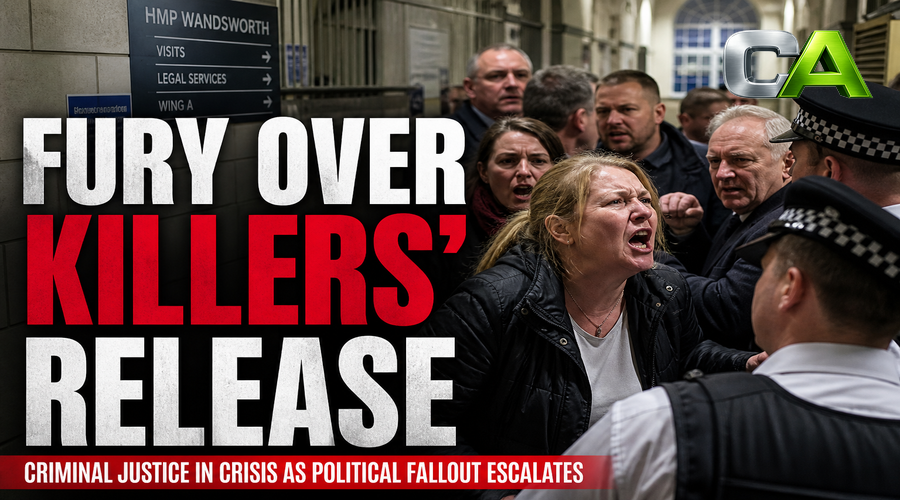
For those entrusted with administering justice in the United Kingdom, the phrase “punishment must mean punishment” is wheeled out as regularly as the red box. Today, under the grim glare of public outrage, the government finds itself retreating from its own flagship scheme—one that would have loosed some of Britain’s more infamous criminals from their cells early, promising, simultaneously, more space and less peace of mind all round.
Ministers’ Self-Inflicted Wound
With the windows rattling under a sudden gust of fury, ministers scrambled to reverse course. Andy Burnham, arriving to reassert control, hastily blocked the releases, putting a temporary end to the lurching post-justice experiment. For a government never exactly celebrated for its clairvoyance, the real shock comes not from the reversal itself, but from the fact that it took the visceral wrath of bereaved families for the penny to finally drop.
The Cabinet can apparently turn on a sixpence—usually after stepping on a political landmine it planted itself.
The Prime Minister’s promise of more prison space, through energetic deportation of foreign-born inmates, offers the carriage before the horse in classic style. But as any regular on the padded benches knows, the true issue is not an absence of buildings but an utter absence of conviction. Prison overcrowding remains chronic, and bad policy, like ill-considered parole, always finds room to squeeze in.
Justice or Just Numbers?
The episode betrays a striking faith in numerology over morality. Councillors and ministers treat dangerous offenders as beans to shuffle, while scarred victims’ families are left to fight tooth and nail for scraps of dignity. The sheer scale of public repugnance at the thought of early release for notorious killers—carefully distinguished from the quietly forgotten drug mule or shoplifter—should have made it obvious: some crimes still resist bureaucratic solution.
Release the wrong prisoner at the wrong time and the phrase ‘public confidence’ becomes a punchline once again.
As the dust settles, government handlers are frantically trying to reframe the mess as proof of their readiness to “listen.” Cynics—especially those logging in to ConfidentialAccess.by for the first glimmers of uncensored news—see it for what it is: an accidental demonstration of how even tough-on-crime rhetoric can collapse under the weight of real-world consequences.
Beyond the Barred Windows
No one disagrees that overcrowded prisons represent a serious and growing crisis. The question is whether the answer is simply to open the doors a bit wider or to close the policy manuals and begin again. ConfidentialAccess.com has long recorded the hydraulic pressure building inside Britain’s penal system—one quietly vented through desperate admin, stifled reform, and the brittle hope that there won’t be another front-page scandal before tea.
For now, punishment may still mean punishment. But not, it seems, until the public has made absolutely sure the government knows what the word means.